


ERS satellite, March 2026
COPD
Primary prevention
Speaker
Professor Monika Gappa, Director, Department of Paediatrics, Evangelisches Krankenhaus Dusseldorf, Germany
Prevention must precede first signs of disease
COPD is a cumulative expression of exposures that begin before birth and unfold during the course of life. In daily work, respiratory healthcare professionals mostly do secondary and tertiary prevention, meaning early detection of disease and preventing disease progression. By the time when COPD comes clinically visible, the origins of the disease may have been set decades earlier.
Therefore the focus should be moved towards primary prevention. For primary prevention to be effective, lung health should be protected for the whole population and not just individual patients. COPD is mostly considered as a disease that occurs in mid- or late adulthood and is related to smoking. Looking from a different perspective, COPD is not just a disease of aging lungs.

Pekka Ojasala
Medical Advisor, Chiesi Nordic
Lung function: A poor start can have life long implications
Lung function is a reflection of life events, shaping the development, growth and decline of the function. This trajectory begins already in utero1. Low early lung growth or accelerated decline are linked to higher risk of adult COPD. It is estimated that around 50% of adult COPD develops in those who never reach the normal peak of lung function. The physiological and epidemiological evidence was summarized in a clinical review by Andrew Bush, stating:2
Lifetime lung function is determined by the end of the preschool years
Andrew Bush, professor of Paediatric Respirology, Imperial college, UK
Childhood disadvantage factors impacts future lung function
A European study3 showed that «childhood disadvantage factors» such as asthma (own or parental), maternal smoking and severe lower respiratory tract infection (LRTI) before school age was significantly associated with lower FEV1 and steeper FEV1 decline. The influence of these disadvantage factors were as large as current heavy smoking in terms of lung function decline and COPD diagnosis in later life.
Similar observations were made by the CAMP Research group who found, that in patients with mild-to-moderate childhood asthma, 75% had abnormal lung function development.4 Normal peak of lung function was only obtained by 50% and 25% had an early decline in lung function. A Danish study5 found that asthma-like symptoms in early childhood doubled the risk for COPD and COPD medication.
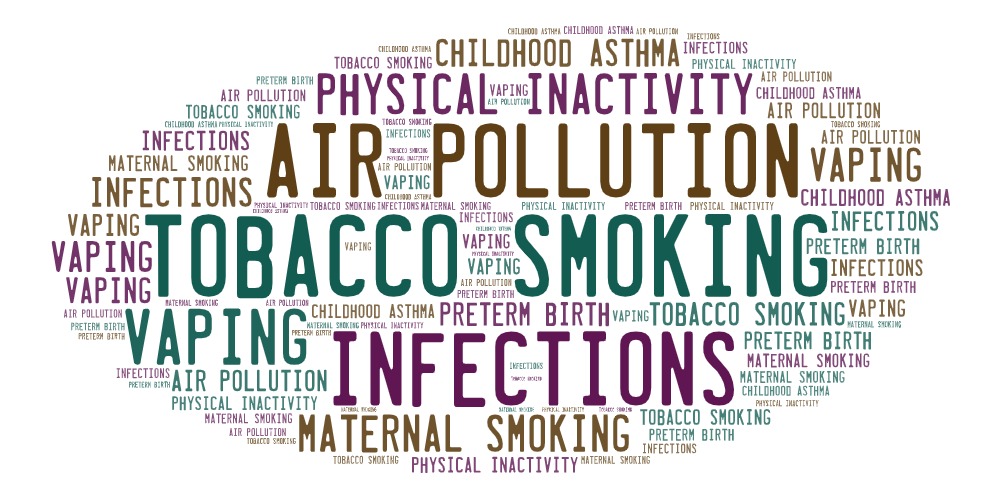
Points for primary prevention
Most exposures causing impairment of the lung development and long term health occur early and can be prevented. Primary prevention is a lifelong, cross-disciplinary, societal responsibility.

Pekka Ojasala
Medical Advisor, Chiesi Nordic
References
- Melén E, Faner R, Allinson JP, Bui D, Bush A, Custovic A, Garcia-Aymerich J, Guerra S, Breyer-Kohansal R, Hallberg J, Lahousse L, Martinez FD, Merid SK, Powell P, Pinnock H, Stanojevic S, Vanfleteren LEGW, Wang G, Dharmage SC, Wedzicha J, Agusti A; CADSET Investigators. Lung-function trajectories: relevance and implementation in clinical practice. Lancet. 2024 Apr 13;403(10435):1494-1503. doi: 10.1016/S0140-6736(24)00016-3. Epub 2024 Mar 12. PMID: 38490231.
- Bush A. COPD: a pediatric disease. COPD. 2008 Feb;5(1):53-67. doi: 10.1080/15412550701815965. PMID: 18259975.
- Svanes C, Sunyer J, Plana E, Dharmage S, Heinrich J, Jarvis D, de Marco R, Norbäck D, Raherison C, Villani S, Wjst M, Svanes K, Antó JM. Early life origins of chronic obstructive pulmonary disease. Thorax. 2010 Jan;65(1):14-20. doi: 10.1136/thx.2008.112136. Epub 2009 Sep 2. PMID: 19729360.
- McGeachie MJ, Yates KP, Zhou X, Guo F, Sternberg AL, Van Natta ML, Wise RA, Szefler SJ, Sharma S, Kho AT, Cho MH, Croteau-Chonka DC, Castaldi PJ, Jain G, Sanyal A, Zhan Y, Lajoie BR, Dekker J, Stamatoyannopoulos J, Covar RA, Zeiger RS, Adkinson NF, Williams PV, Kelly HW, Grasemann H, Vonk JM, Koppelman GH, Postma DS, Raby BA, Houston I, Lu Q, Fuhlbrigge AL, Tantisira KG, Silverman EK, Tonascia J, Weiss ST, Strunk RC. Patterns of Growth and Decline in Lung Function in Persistent Childhood Asthma. N Engl J Med. 2016 May 12;374(19):1842-1852. doi: 10.1056/NEJMoa1513737. PMID: 27168434; PMCID: PMC5032024.
- Bisgaard H, Nørgaard S, Sevelsted A, Chawes BL, Stokholm J, Mortensen EL, Ulrik CS, Bønnelykke K. Asthma-like symptoms in young children increase the risk of COPD. J Allergy Clin Immunol. 2021 Feb;147(2):569-576.e9. doi: 10.1016/j.jaci.2020.05.043. Epub 2020 Jun 12. PMID: 32535134.
- Mazur NI, Caballero MT, Nunes MC. Severe respiratory syncytial virus infection in children: burden, management, and emerging therapies. Lancet. 2024 Sep 21;404(10458):1143-1156. doi: 10.1016/S0140-6736(24)01716-1. Epub 2024 Sep 9. PMID: 39265587.
ID 20301-11.03.2026